Crossing America in an RV: a coast-to-coast route with the family, the real prices and everything you need to know
A cross-country USA RV trip with kids: 18 days from New York to Santa Monica on Route 66, with real prices, insurance, campgrounds and 2026 must-knows.
Some trips are a list of places, and some trips are a line. Crossing the United States in an RV is a line: you start with your feet in one ocean, and a few thousand kilometers later you dip them in the water of another. In between there are cornfields, steel towns, red deserts, cities that look like a movie set, motels shaped like tepees, and kids asleep in the bunk over the cab while the sun sets over Arizona.
And in 2026 there's another reason to do it now: Route 66 is turning 100. The highway was commissioned on November 11, 1926, and for the centennial a federal centennial commission was set up, eight states are running event programs of their own, and every small town along the route is organizing a festival, a parade or a car meet. If you've ever planned to do this, this is the year.
This article isn't an inspiration list. It's a planning guide: how many days you really need, which route to choose, what each item actually costs, where the traps are in insurance and mileage, and what changed in the national parks in 2026 in a way that directly affects foreign visitors, Israelis included.
First, the truth about the distances
This is the part most articles skip, and it's the part that decides whether the holiday will be a dream or a marathon.
The minimum distance between the Atlantic coast and the Pacific coast, in a nearly straight line, is about 4,500 kilometers (about 2,800 miles). A real route, one that passes through places worth stopping at, comes to 5,300 to 5,500 kilometers (about 3,300 to 3,400 miles). In an RV, which travels more slowly than a car, stops to refuel more often, and isn't really enjoyable for more than five hours a day with kids, that translates into about 14 to 16 actual driving days.
From there, the math is simple:
- 14 days coast to coast with kids is possible, but it's almost all driving. You'll need to average 400 kilometers a day, every day, with almost no rest days. It works for families with older kids who love the road, and it doesn't work with young kids.
- 18 to 19 days is the right number. It allows two full days in big cities, a full day at the Grand Canyon, and two or three "short" days of under three hours' driving that save everyone's mood.
- 21 days or more is real luxury. You can add the Utah parks, Las Vegas, or simply sit on a California beach for three days at the end.
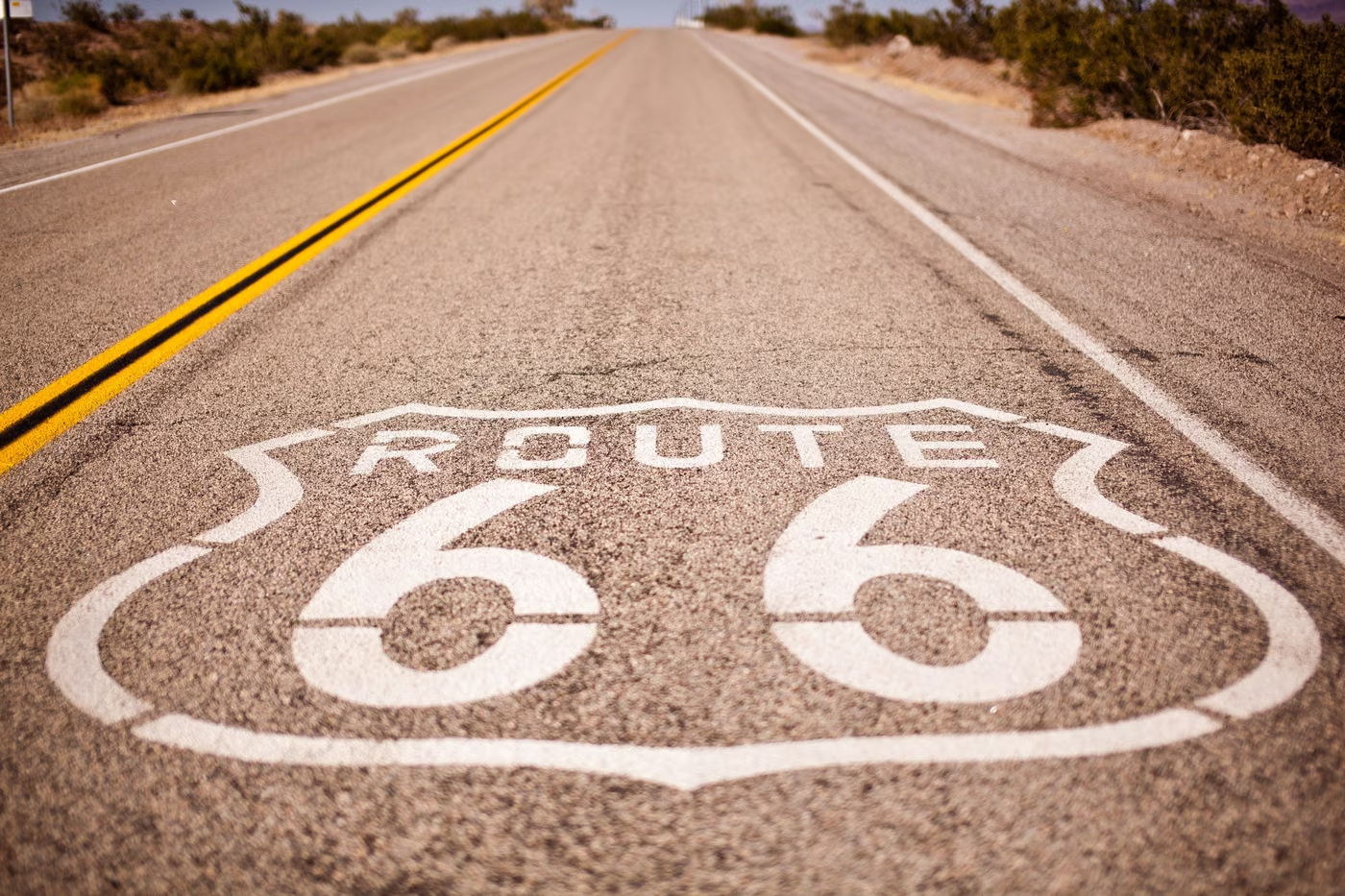
Our recommendation: if you're limited to exactly two weeks, don't do coast to coast. Do Route 66 only, from Chicago to Santa Monica: 3,900 kilometers (about 2,400 miles), stunning scenery, and it still ends on the shore of the Pacific. If you can stretch to 18 or 19 days, do the full crossing.
Three versions, and how to choose between them
Version A: the full crossing, 19 days (recommended). New York to Santa Monica, about 5,400 kilometers. Three days in New York without the RV, then Niagara Falls, Chicago, and all of Route 66 to the Pacific. This is the route broken down day by day below.
Version B: Route 66 only, 14 days. Land in Chicago, fly out of Los Angeles, about 3,900 kilometers. You give up New York and Niagara and gain a completely normal pace. This is the version we most recommend for families with kids under eight.
Version C: the northern route, 21 days or more. San Francisco to New York via Yosemite, Yellowstone, Mount Rushmore and the Badlands. The most dramatic scenery of the three, but it's longer, more expensive in the parks, and only possible from late June to early September because of snow on the mountain passes. It suits families with teenagers and anyone for whom nature matters more than nostalgia.
As for direction, we recommend east to west. First, because that's how Route 66 works as a story: it drives into the sunset and ends at the "End of the Trail" sign on the Santa Monica Pier, and that's an ending kids remember. Second, because the time differences work in your favor: driving west, you gain an hour every few days, which makes jet lag a much smaller problem. And third, because the trip home to Israel from Los Angeles at the end is a long overnight flight that everyone sleeps through.
The route day by day: 19 days from the Atlantic to the Pacific
Days 1 to 3: New York, without the RV.
This is the first place people go wrong. Don't pick up the RV on landing day. Manhattan has no RV parking, the tunnels have height limits, and the idea of steering a nine-meter vehicle through that city after an eleven-hour flight is simply a bad one. Take a hotel or an apartment for three nights, do the Statue of Liberty, Central Park, Times Square and one museum, and only then start driving.
If you do want the RV already in New York, there's one good solution: Liberty Harbor in Jersey City, an RV park with full hookups right across from the Manhattan skyline, with a ferry and a subway into the city. It's the only campground in the area that really works for a family.
Day 4: pick up the RV, New Jersey to the Finger Lakes (about 380 km).
Pick up the RV in the morning, not at noon: the handover itself takes an hour to an hour and a half (a walkthrough of the systems, a damage check, filling the water). The first day should be short and easy, because you're learning to drive a new vehicle. A good stop on the way is Watkins Glen, a gorge with a trail past nineteen waterfalls: one of the most beautiful walks in the eastern US, and short enough for kids.
Day 5: to Niagara Falls (about 250 km).
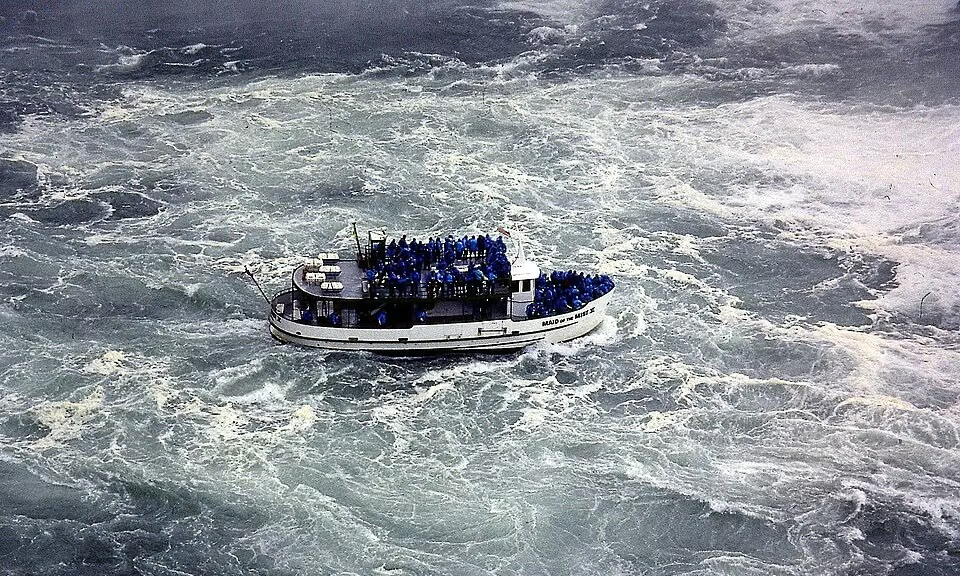
The US side of the falls is the less commercial side, and much better for getting close to the water. Two attractions that are really worth it: Maid of the Mist, the boat that goes right into the cloud of spray ($30.25 per adult, $19.75 per child 6 to 12, under 5 free), and Cave of the Winds, a system of wooden decks that takes you to within a few meters of the falls (about $23 per adult, about $19 per child). Note: the combined "Discovery Pass" has been discontinued, and in 2026 each attraction is sold separately. Don't cross to the Canadian side: that means leaving the US and re-entering, with everything that implies with a rented RV.
Day 6: Niagara to the Cleveland area (about 380 km).
Along the south shore of Lake Erie. If your kids are nine or older, seriously consider a stop at Cedar Point in Sandusky, one of the best roller coaster parks in the world, with more than seventeen coasters. With younger kids, you'll prefer Cleveland itself, with the Rock and Roll Hall of Fame and the beach on the lake.
Day 7: to Chicago (about 500 km).
The first long day, and that's fine: the road is wide and straight. Take an RV park in Chicago's western suburbs rather than in the city itself, and go into town on the Metra train.
Day 8: Chicago, a full day.
The most underrated city in the US for families. Millennium Park with "the Bean," the Museum of Science and Industry (the best in the US for kids, with a real German submarine from the war), Shedd Aquarium, and an architecture cruise on the river that even kids enjoy. And at the end of the day, the important photo: the "Begin Route 66" sign on Adams Street, at the corner of Michigan Avenue. That's where the road begins.
Day 9: Chicago to St. Louis (about 480 km), via Springfield, Illinois.
This is where the route's real character begins. Illinois is the state that has invested the most in preserving Route 66: 1950s diners, restored neon signs, and small museums in every town. In Springfield you can fit in the Lincoln Home and his presidential library.
Day 10: St. Louis to Springfield, Missouri (about 380 km).
In the morning, the Gateway Arch, the 192-meter steel arch, with an internal tram that takes you to the top (about $19 to $23 per adult and about $14 to $18 per child 3 to 15, depending on the date; the museum and the park itself are free). Book your tram time in advance. Heading south, Meramec Caverns, a cave system made famous by its giant signs painted on barn roofs along Route 66.
Day 11: to Oklahoma City (about 470 km).
This is the most "Route 66" day of the whole route, and it's all short stops: the Blue Whale of Catoosa, a 24-meter concrete whale that has sat in a pond since 1972 and that you can climb on; a round barn in Arcadia from 1898; and Pops 66, a gas station with a 20-meter soda bottle that lights up at night, and more than six hundred flavors of soda inside. Your kids will choose by color.
Day 12: Oklahoma City to Amarillo, Texas (about 420 km).
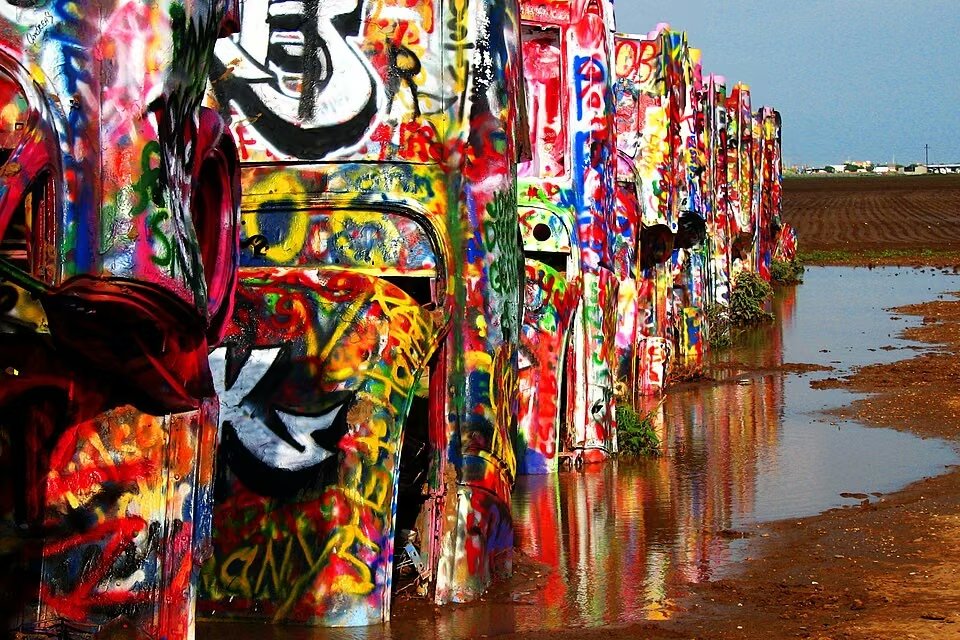
The landscape opens up and the sky gets big. Two must-stops: Cadillac Ranch, ten Cadillacs planted nose-down in the ground at an angle, where you're allowed and even expected to spray paint on them (buy spray cans in town; parking and entry are free), and the Big Texan in Amarillo, a restaurant that offers its famous 72-ounce steak (about two kilos) free to anyone who finishes it within an hour. Nobody finishes it. It's worth watching.
Day 13: Amarillo to Albuquerque, New Mexico (about 460 km).
You cross a time zone and enter the real Southwest. Tucumcari is the best-preserved neon town on the whole highway (the Blue Swallow Motel there still operates), and it's worth stopping at sunset. After it comes Santa Rosa and its Blue Hole: a natural pool twenty meters deep, at a constant 18°C (64°F), that you can jump into. The kids won't forget it.
Day 14: Albuquerque to Holbrook, Arizona (about 400 km).
On the way: Petrified Forest National Park, one of the strangest and most beautiful parks in the US: 200-million-year-old tree trunks turned into colorful stone, with the Painted Desert inside it too. Entry is $25 per private vehicle, valid for seven days. In Holbrook you sleep near the Wigwam Motel, a row of concrete tepee-shaped rooms from the 1940s; even if you're sleeping in the RV, it's worth stopping for a photo.
Day 15: Holbrook to the Grand Canyon (about 340 km).
Two stops on the way: Winslow, with a street corner made famous by an Eagles song and a statue commemorating it, and Meteor Crater, a hole 1,200 meters across formed 50,000 years ago, which NASA used to train astronauts ($29 per adult, $25 for youth 6 to 13, under 6 free). You reach the Grand Canyon in the afternoon, just in time for sunset.
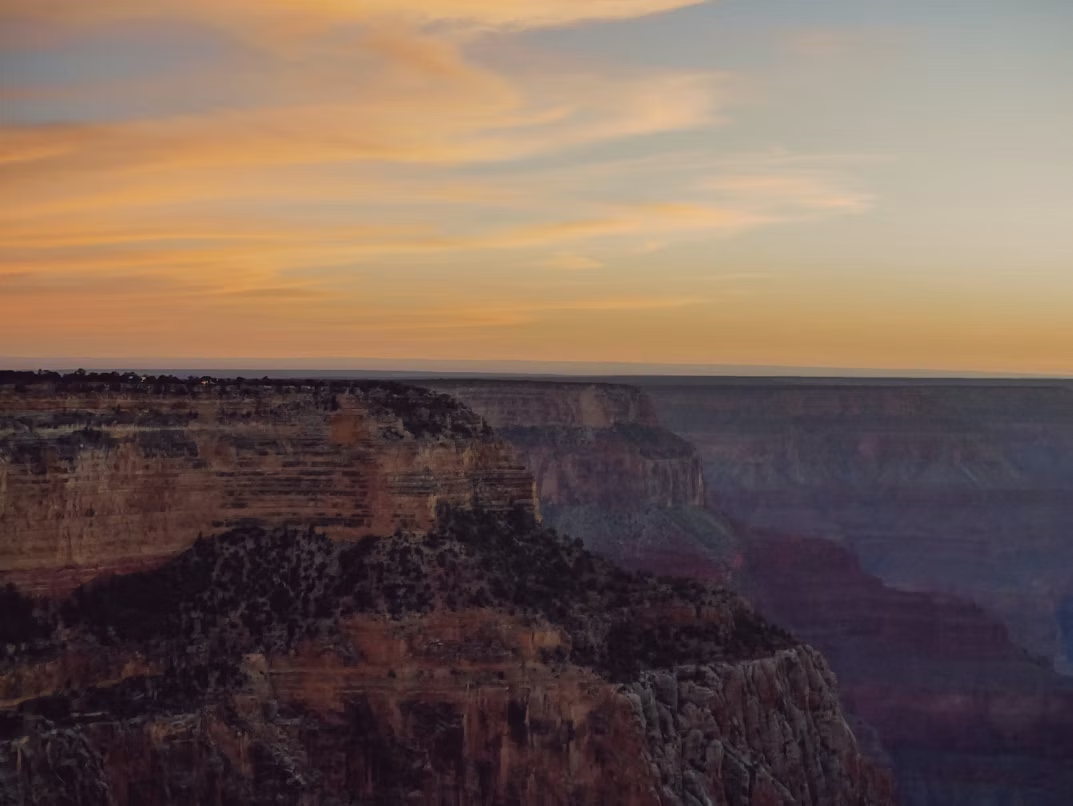
Day 16: the Grand Canyon, a full day.
This is the day you came for. The South Rim trail, free shuttles between the viewpoints, a short walk down the Bright Angel Trail (not all the way, that's a full day), and sunset at Hopi Point. There are two things to know about staying in the park: Mather Campground costs about $30 a night but has no electric or water hookups and is limited to RVs up to 30 feet, while the adjacent Trailer Village offers full hookups from about $86 a night. Both are snapped up months in advance.
Day 17: the Grand Canyon to Kingman (about 350 km), via Seligman.
Back on Route 66 for the longest continuous stretch preserved in its original form: 260 kilometers between Seligman and Topock. Seligman itself is a small town that tells the whole story of the highway (it was also an inspiration for Radiator Springs in the movie Cars), and the Hackberry General Store on the way is a neon museum in its own right.
Day 18: Kingman to Santa Monica (about 500 km).
The last day, and a long one. Oatman is a half-abandoned mining town where wild burros roam free on the main street and eat from your hand (buy carrots at the store). Note that the road there, over Sitgreaves Pass, is narrow and winding; RVs over 12 meters shouldn't try it. Then the Mojave Desert, Roy's in Amboy, and into Los Angeles. The finish: the Santa Monica Pier and the "End of the Trail" sign. Take off your shoes, walk into the water, take the picture. You've crossed a continent.
Day 19: return the RV and fly home.
Plan the return for the morning and the flight for the evening, or take an extra night at a hotel near the airport. Don't plan the RV return and the flight three hours apart: the return check includes emptying the tanks, a full refuel and a damage review, and it takes time.
When to go, and what to watch out for in each season
This is the section that decides how pleasant it will actually be.
- May, early June, September and early October are the best window. Pleasant weather, everything open, fewer crowds.
- July and August are the big Israeli summer vacation, and also the hardest season on this route. In Arizona and the Mojave Desert temperatures top 40°C (104°F), and in New Mexico and Arizona it's monsoon season, with afternoon storms. It's entirely doable (the RV is air-conditioned and the parks are open), but you need to drive early in the morning, plan to spend midday indoors, and keep up with water.
- April to June is tornado season in Oklahoma, Kansas and the Texas Panhandle. That's not a reason not to go, but it's an excellent reason to install a weather alert app and obey it. The rule is simple: if there's a warning, you don't drive; you go into a solid building.
- From November to March, many of the small attractions along the highway are closed or keep reduced hours, and that's the main reason not to plan this trip in winter. Also, the Grand Canyon is very cold in winter, and the snow on Arizona's high passes is real.
As for the Route 66 centennial: events are spread across all of 2026, but the peak is on November 11, the birthday itself, and in the summer months. If catching a festival matters to you, check the events calendar of the specific state you're passing through; each of the eight states runs its own program.
Which RV to take, and why size is the most important decision
There are three relevant categories for a family:
- A 25-foot (about 7.6-meter) Class C RV. Sleeps up to five: a double bed in the back, a double bed over the cab, and a dinette that converts into a bed. This is the recommended size for a family of four.
- A 30-foot (about 9-meter) large Class C. Sleeps up to seven, with a real bedroom in the back. Suits a family of five or more, or anyone who wants comfort and is willing to pay for it in every respect.
- A small camper van (Class B). Easy to drive, too small for a family with kids for two and a half weeks. Don't be tempted.
The deciding rule: 25 feet is the size that fits everywhere. RVs up to 25 feet fit more than ninety percent of national park campgrounds; from 40 feet up, that drops to only about half. The same goes for the specific parks on the route: Mather Campground at the Grand Canyon is limited to 30 feet, and the Going-to-the-Sun Road in Glacier (if you choose the northern route) bars any vehicle over 21 feet.
An especially important update for 2026: in Zion National Park, the escort system for the Zion-Mount Carmel Tunnel has been abolished. Until June 6, 2026, vehicles that were too tall or too wide paid a $15 escort fee; since June 7 a total ban has replaced it: vehicles over 3.45 meters tall, 2.39 meters wide (including mirrors and bike racks) or 10.9 meters long are completely banned on the whole stretch between Canyon Junction and the East Entrance. If you planned to include Zion in the extended version, this is something you must check against the exact dimensions of the RV you're given, not assume.
What it costs: a full budget breakdown
The calculation below is for a family of four, 19 days, 15 nights in the RV, in high season. Amounts are in Israeli shekels (NIS), converted at about NIS 3 to the dollar. All prices are checked ballpark figures, not a quote.
- Open-jaw flights (landing in New York, flying out of Los Angeles). It's the only sensible option for a one-way route. The range is roughly $1,100 to $1,600 per person. For the family: NIS 13,000 to 19,000.
- RV rental, 15 nights. A Class C RV in peak season runs $180 to $260 a night. About NIS 8,000 to 11,700.
- One-way drop fee. This is the item that surprises everyone. Rental companies charge $250 to $800, and on a full cross-country route it tends toward the top end. About NIS 1,500 to 3,000.
- Mileage package. See the next section; this is a critical item. About NIS 2,250 to 3,000.
- Fuel. About 3,500 miles, an RV that does 8 to 10 miles per gallon, and an average price of about $4.06 a gallon (the national average in August 2026). About NIS 4,300 to 5,300.
- Campgrounds, 15 nights. An average of $45 to $70 a night, mixing commercial campgrounds, national parks and free nights. About NIS 2,000 to 3,200.
- Supplementary insurance. Extended liability insurance costs about $10 to $15 a day, and travel medical insurance for the family another few hundred dollars. About NIS 1,300 to 2,100.
- A hotel in New York, 3 nights. About NIS 2,300 to 3,600.
- Food. Cooking in the RV for most meals, a restaurant every other day. In practice $80 to $130 a day. About NIS 4,500 to 7,500.
- Attractions and entry fees, including the parks pass. About NIS 2,500 to 3,700.
- Equipment kits, propane, tank dumping, laundry, toll roads and a reserve. About NIS 1,500 to 2,400.
Total: about NIS 43,000 to 64,000 for a family of four for 19 days (roughly $14,000 to $21,000 at the same rate), or about NIS 11,000 to 16,000 per person.
The budget version (Route 66 only in 14 days, a smaller RV, shoulder season, lots of cooking and free nights) comes down to around NIS 30,000 to 36,000 for the family. The pampered version, with a 30-foot RV, campgrounds with a pool every night and restaurants, easily passes NIS 80,000.
Two items that wreck budgets: mileage and one-way fees
If this is the only section of the article you remember, it has already paid back your reading time.
In the United States, unlike Europe, an RV rental almost never includes unlimited mileage. You pay for every mile separately. At Cruise America, the largest rental company in the US, the rate is 39 cents a mile. On a 3,500-mile route that's $1,365, more than NIS 4,000, on an item most people don't even consider when comparing prices.
The solution exists and it's simple: prepaid mileage packages. Cruise America sells an unlimited mileage package for $750, and an "Unlimited Plus" package for $1,000 that also includes a personal kit for each traveler, a vehicle kitchen kit and unlimited generator use for 21 days. On a cross-country route, the unlimited package pays for itself after about 1,900 miles. Buy it in advance, always.
Two more items hide in the same company's fine print, and it's worth checking the equivalents with whoever you rent from:
- The generator is metered and billed at $3.50 an hour. If you sleep several nights without an electric hookup and with the air conditioning running, it quickly adds up to a few hundred dollars.
- Equipment kits are bought separately: a personal kit (sleeping bag, pillow, towels) at about $75 per person, and a vehicle kitchen kit at about $110. For a family of four that's about $410 more, unless the package you bought includes them.
The one-way drop fee is the second item. A full continental crossing is by definition a one-way rental, and the companies charge $250 to $800 for it. But there's a loophole worth knowing: rental companies need to move vehicles between branches by season, so they offer relocation deals: specific one-way routes at discounts of up to ninety percent or more on time and miles, with no one-way fee. The downside: the dates and routes are fixed and limited, and there's usually a maximum number of days. If your dates are flexible, it's well worth checking before you pay full price.
Insurance: what you really need, and what your credit card doesn't cover
This is the section most worth reading slowly.
The first point surprises most travelers: the rental car coverage you get through your credit card doesn't apply to RVs. The big card companies explicitly exclude "recreational vehicles" from coverage; it's written in the policy terms of the leading premium cards. If you rely on the card, you're effectively driving with no damage cover.
What does exist:
- Basic third-party cover is usually included in the rental, but only at the state's legal minimum limits, which are very low relative to the size of real claims in the US.
- Supplemental liability insurance (SLI) raises the limit to a million dollars and costs about $10 to $15 a day. In the United States, this is not a luxury. In a country where a single bodily injury claim can reach amounts unlike anything you've known, it's the most important item in the whole insurance package.
- Collision damage waiver (CDW): here there's one question to ask: how high is the deductible? On RVs it usually ranges from $1,000 to $1,500, and sometimes higher. Some companies let you buy the deductible down to zero for a daily fee, and in an RV, where it's very easy to cause minor damage, that's usually worth it.
- Private travel medical insurance is an absolute must. Israeli health insurance covers nothing in the US, and medical care there is among the most expensive in the world. One ER visit for a child's tummy ache can easily run to thousands of dollars. Make sure the policy includes medical evacuation.
And two notes that actually save money:
What insurance usually doesn't cover on an RV: damage to the roof and the awning, impact to the upper part of the vehicle, windows, tires, and interior water damage. These are exactly the most common damages on a rented RV, and almost all of them have the same cause: a driver who forgot the vehicle is tall. An RV is about 3.4 meters high, which is more than the clearance of an underground parking garage, a McDonald's drive-through, or the low branches at a campground.
And in any case: photograph everything. Before you leave the branch, shoot a slow video of the vehicle's whole exterior, including the roof if possible, the windows and the tires, with the date. It's the practice that saves the most arguments at return. A deposit of a few hundred to a thousand dollars will be held on your credit card for the whole rental.
Where you sleep each night
There are four types of overnight stay, and a good trip mixes them:
- Commercial RV parks (KOA and similar). The national average is about $56 a night, ranging from $40 to $100 depending on location and season. A full-hookup site (electricity, water, sewer) is about $50 to $65; a site with electricity and water only, $30 to $45. They have pools, laundromats and playgrounds, and that's worth a lot on day six of the trip. A Value Kard membership saves about ten percent.
- National park campgrounds. Much cheaper (Mather at the Grand Canyon: about $30) and in unbeatable locations, but usually without hookups and with length limits. And here's the critical rule: reservations open on recreation.gov exactly six months ahead, at 10:00 a.m. Eastern Time, and the popular sites are gone within minutes. Yellowstone works differently: the whole summer opens at once at the end of March. Mark the date in your calendar and be in front of the screen.
- Organized free stays. The Harvest Hosts network lets you stay one night at farms, wineries and private museums all over the US for an annual membership of $99 (from $169 combined with Boondockers Welcome). No hookups, but a great atmosphere and real savings. Boondockers Welcome on its own costs $79 a year.
- Overnight parking in store lots. Walmart allows overnight parking at some stores, at the store manager's discretion, but more than a thousand stores prohibit it. The rules: one night only, no putting out chairs or opening the awning, and call the store in advance. It's an excellent emergency option for a day when the driving ran longer than expected.
And two running costs worth budgeting: dumping the waste tanks at a dump station costs about $10 to $20 where there's no sewer hookup (at a full-hookup site it's included), and refilling the propane tank costs about $15 to $20.
National parks in 2026: the change every foreign visitor must know
This is the most significant change in planning a US trip this year, and it's barely talked about in Israel.
Since January 1, 2026, visitors who are not US residents, aged 16 and over, pay a $100 per person surcharge to enter the eleven most visited national parks, and that's on top of the regular entry fee. The parks on the list: Acadia, Bryce Canyon, Everglades, Glacier, Grand Canyon, Grand Teton, Rocky Mountain, Sequoia and Kings Canyon, Yellowstone, Yosemite and Zion. Children up to 15 are exempt.
At the same time, the annual "America the Beautiful" pass has been split into two prices: $80 for US residents, and $250 for non-residents.
And here's the math you have to do: the $250 non-resident pass waives the $100 surcharge at all eleven parks, and it covers a whole private vehicle, or the pass holder plus three adults at sites that charge per person.
So for a family with two parents, a single entry to the Grand Canyon without a pass costs $35 for the vehicle plus $200 for the two adults: $235, for one park. The $250 pass covers that and every other park for a year. The conclusion is clear-cut: if you enter even one park on the list, buy the non-resident pass. You can buy it in advance online from the USGS store or at the park entrance itself.
Note that Petrified Forest, which is on our route, is not on the list of eleven parks: there you pay only $25 per vehicle, and the pass covers it too.
Driving an RV: what nobody tells you in advance
The driving itself is easier than most people fear: US roads are wide, drivers are patient and speeds are low. But there are a few things worth taking in on day one rather than the hard way:
- Write the vehicle's height on a note and stick it on the dashboard. It's the most useful tip in the whole article. Every roof damage starts the moment the driver forgets.
- Google Maps doesn't route safely for RVs. It doesn't know about low bridges, prohibited roads or restricted tunnels. Use a dedicated RV navigation app that takes your vehicle's dimensions.
- Always turn wide. The back of the RV swings out in a turn; it's called tail swing, and it's what hits the posts at gas stations.
- Crosswind is the only genuinely scary thing about driving an RV, especially in Texas and New Mexico. If there's a high wind warning, change your departure time.
- Stop every two hours. You're working harder than usual behind the wheel: more mirrors, more weight, more variables. Fatigue is the number one risk on this trip.
- The golden rule for reversing: one drives, one gets out and guides. Always.
- Refuel at half a tank, not a quarter. On some stretches between New Mexico and Arizona there are long distances without stations.
Food, kosher and shopping on the road
The RV's big advantage is the kitchen. There's a fridge, a stove, a microwave and a sink, and a family that cooks two meals a day saves thousands of shekels over two and a half weeks. US supermarkets are huge and cheap, and it's best to do one big shop every three days, not every day.
For families who keep kosher, this route needs advance planning, but it's definitely doable. The big concentrations are at the ends: New York, Chicago and Los Angeles have a huge choice of kosher restaurants and supermarkets. In the middle of the route it's sparser, and that's where the RV kitchen takes center stage:
- Flagstaff, Arizona (on the way to the Grand Canyon): an active Chabad house with Shabbat meals, prepared food and groceries, and a dedicated project called Kosher Canyon that serves the Grand Canyon area.
- Albuquerque and Santa Fe, New Mexico: a Chabad house with prepared food, plus Trader Joe's and Whole Foods stores that carry kosher products.
- In the big cities along the way (St. Louis, Oklahoma City, Tulsa) there are Chabad houses you can arrange food with in advance.
The practical rule: buy dry and frozen goods in bulk in the big cities, and use the RV's freezer. Labeling in the US is convenient: a great many commercial shelf products carry kosher certification, and you can find them in any big supermarket.
The logistics to sort out before the flight
- ESTA. Israelis enter the US under the Visa Waiver Program but must have an ESTA approval in advance. The fee went up to $40 per person, and since January 1, 2026 it's $40.27. Apply at least two weeks before the flight, and only through the official site; dozens of sites charge an unnecessary markup. Note that the new $250 "Visa Integrity Fee" does not apply to Israelis, because it only concerns people who need a visa.
- International driving permit. The Israeli license is written in English, and most US rental companies will accept it, but Israel's Ministry of Transport advises presenting an international permit alongside the Israeli license when renting a car abroad, and some RV companies explicitly require one. It's cheap and easy to get. Don't take a chance on something like this.
- A credit card in the driver's name. Mandatory, for the deposit. Not a prepaid card.
- Toll roads. This route has toll sections in New York, New Jersey, Pennsylvania, Ohio, Indiana, Illinois and Oklahoma. Rental companies charge a daily service fee for using the toll transponder: about $4 to $10 for each day you pass a toll, with a monthly cap. Ask in advance how it works with your company, and plan: sometimes it pays to take a detour.
- eSIM. Buy one before the flight. Reception in the deserts is limited, so choose a provider that runs on a major network, and download offline maps for the whole route.
- Forecasts and tornadoes. Install an American weather app that receives NWS alerts. In the Plains, that's not a gimmick.
What not to miss
If you remember only one list from this article, make it this one:
- The "Begin Route 66" sign on Adams Street in Chicago: the photo that opens the story.
- Cadillac Ranch in Amarillo: ten Cadillacs in the ground, and spray paint in the kids' hands.
- The Blue Hole in Santa Rosa: a turquoise-blue pool in the middle of the desert.
- Petrified Forest and the Painted Desert: a landscape that looks as if someone painted it in stripes.
- Sunset at the Grand Canyon from the South Rim: there's no substitute.
- Meteor Crater: the hole where NASA trained astronauts.
- The wild burros on Oatman's main street: the experience the kids will tell people about first.
- The Wigwam Motel in Holbrook: a row of concrete tepees from the 1940s.
- Niagara Falls up close, in the spray: a real soaking, not a distant view.
- The "End of the Trail" sign on the Santa Monica Pier: the bottom line of the whole trip.
And what's better to skip
- Driving the RV into big city centers. New York, Chicago, Los Angeles: park in the suburbs and take the train. In these cities an RV is a burden, not an asset.
- Squeezing Las Vegas and the Utah parks into two weeks. That adds about four real days. Either extend the trip or give them up.
- Driving all of Route 66 on the original historic road. It's slow, fragmented, and in some parts simply no longer exists. The trick that works: the historic road on the beautiful stretches, the interstate (I-55, I-44, I-40) when you need to cover distance.
- Planning more than two attractions on a driving day. It won't work. Really.
- Booking a campground on the go in peak season. In summer, and especially around the parks, that's a recipe for a night in a Walmart parking lot.
- Taking a 32-foot RV because "it'll be more comfortable." You'll pay for it in fuel, in campgrounds that won't take you, and at every turn in a small town.
What to pack
US plug adapters if you're coming from abroad, and multi-port chargers (an RV has few outlets). Sleeping bags or bedding if you didn't buy a kit. Shower flip-flops, because the campground showers are shared. A headlamp for everyone. Road games and content downloaded in advance for the kids; there's no reception on large parts of the route. Large reusable water bottles. High-SPF sunscreen and hats: the UV at Arizona's altitude is strong even when it isn't hot. One warm layer for everyone, because evenings at the Grand Canyon and in New Mexico are cool in every season. And an extension cord: it's the item more families than any other discover they're missing on the first night.
Crossing a continent in an RV is the far end of family travel abroad, and the principles that work here too (an empty landing day, mornings for the important thing, a gap in the schedule) are collected in the guide to a family trip abroad.
From here to a real itinerary
Crossing the United States in an RV isn't a trip you plan in one evening. You have to match real distances against your kids' stamina, check which campgrounds even take your vehicle's length, grab reservations that open six months ahead, know which attractions are open on your dates, and keep a budget that accounts for mileage, the one-way fee and the new park surcharge. That's exactly the kind of planning that eats up weeks.
That's what Diretix does for you: you choose the destination, the dates and who's in the family, and the system builds a full daily schedule with age-appropriate attractions, real distances and driving times, lodging recommendations and a daily budget, in minutes. One trip a month is built in full, for free, up to 12 days.
Want this as a real itinerary?
Tell us where and when, and the AI builds a full day-by-day itinerary for you in minutes.